

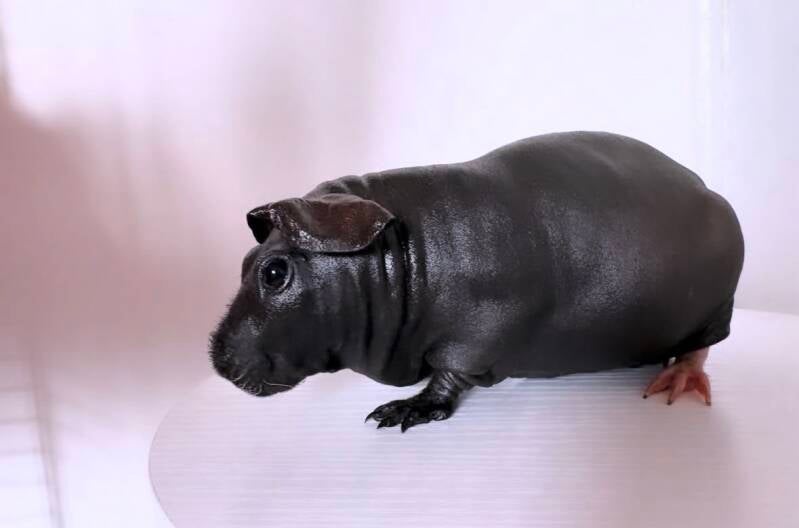
House Hippos… But Make It Expensive
They’re often called “little house hippos”.
Wrinkly, warm, and completely adorable skinnypigs have a way of winning people over instantly.
But behind that softness and novelty there’s a lot more to them than people realise.
Skinnypigs are a type of hairless guinea pig, but they’re not a separate species. They’re the result of a genetic mutation, originally developed through laboratory research in the late 20th century before becoming more widely known as pets.
Because they don’t have fur, their bodies have to work much harder to regulate their temperature. This impacts everything from how much they eat to how they need to be cared for on a daily basis.
Without fur, they lose heat quickly. Their metabolism runs faster, and they burn more energy just to stay warm. This means they need more food, more warmth, and more hands-on care.
They may look low maintenance but they’re anything but.
It’s also something people often ask about whether skinnypigs are still used in laboratories today.
The reality is that hairless guinea pigs were originally bred for research purposes, and animal testing does still exist in some parts of the world. However, in the UK this is strictly regulated under animal welfare laws, and the skinnypigs kept as pets or used in therapy work come from domestic breeding, not laboratories.
Today, most people know them not for where they came from but for the gentle, affectionate animals they are.
For us, what matters most is how they are cared for.
Whether an animal is bred, bought, or rescued the responsibility is the same. To provide the right environment, the right diet, and a life where they feel safe and understood.
Skinnypigs in particular need knowledgeable, committed owners. They’re not an impulse pet, and they’re not something to take on lightly.
That’s why education is such a big part of what we do helping people understand what proper care actually looks like, so animals don’t end up in the wrong situations to begin with.
Because this isn’t just about having animals.
It’s about doing right by them.
The biggest starting cost is always their setup. We use Kavee C&C cages with Kavee fleece liners, which are brilliant for hygiene and comfort, but they’re not a one-off purchase.
When it comes to space, guinea pigs need far more room than people expect. A good guideline for C&C cages is a minimum of 4x2 grids for two guinea pigs, but realistically 4x4 and above gives them the space they truly need to move, explore, and stay active, especially important for skinnypigs who need help maintaining body heat.
A full cage setup can cost anywhere from £100 to £200 or more, and fleece liners usually need multiple sets, costing around £30 to £60 each so you always have clean ones ready.
Because they don’t have fur, temperature control is essential.
Skinnypigs should be kept indoors in a stable environment, ideally around 18 to 24°C. They do not cope well with cold temperatures, drafts, or sudden changes in environment.
To help them stay warm and comfortable, they need plenty of soft hides, fleece bedding and blankets, and enclosed sleeping areas where they can trap heat.
Some people choose to use low, pet-safe heat pads, but these must always be properly covered and monitored, and should never replace a consistently warm room.
They will naturally seek warmth, snuggling together, burrowing into fleece, and hiding away, so their setup needs to allow for this.
Food is an ongoing weekly cost, and skinnypigs eat a lot. Each week includes a box of loose peppers from Lidl, romaine lettuce, and a rotation of other fresh vegetables. Alongside that, they need constant access to timothy hay, good quality pellets, and forage.
Hay should always make up the majority of their diet, supporting digestion and dental health, as guinea pigs’ teeth grow continuously throughout their lives.
Roughly, food can cost anywhere from £10 to £25 or more per week depending on numbers and variety.
Because they don’t have fur to protect their skin, they also need regular maintenance. We coconut oil them weekly to keep their skin healthy, trim their nails every three to four weeks, and carry out daily health checks.
Their cages need cleaning every single day to keep their environment dry, warm, and hygienic. Damp or dirty conditions can quickly lead to skin issues or illness.
They also need enrichment and comfort. Multiple hides, tunnels, and soft resting areas are essential. They are highly social animals and should never be kept alone companionship is a huge part of their wellbeing.
Vet care is another important factor that often gets overlooked. Skinnypigs are less commonly understood than standard guinea pigs, and not all vets have experience with them. Because they are a genetic mutation, there is less documentation available, which can make treatment more complex.
They can be prone to skin irritation or dryness, rapid weight loss if unwell, dental issues, and in some cases neurological conditions.
Having emergency supplies like Critical Care feed at home is essential in case they need syringe feeding.
It’s also important to weigh them regularly, as weight loss is often one of the first signs that something isn’t right.
Vet bills can vary, but exotic care is rarely cheap, and it’s something you need to be prepared for.
In terms of lifespan, skinnypigs don’t always live as long as standard guinea pigs. However, with proper care, a good diet, and close monitoring, many still live full and happy lives.
And despite all of this, they are one of the most incredible therapy animals.
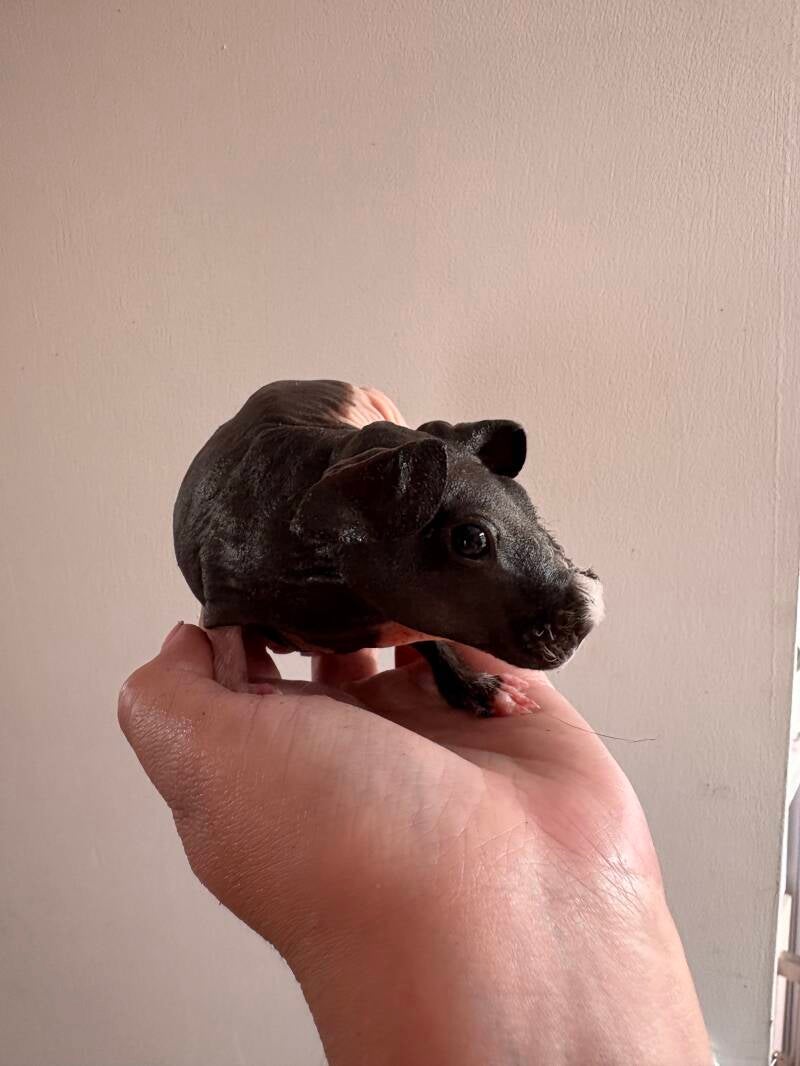
Their warmth, both physically and emotionally, is something people notice instantly. Without fur, they feel like a tiny hot water bottle in your hands, calming, grounding, and comforting in a way that’s hard to explain until you experience it.
They’re gentle, slow-moving, and non-intimidating, which makes them perfect for people who may feel anxious around larger animals. They don’t overwhelm they invite quiet interaction.
For many people, especially in care settings or those with additional needs, that softness and stillness creates a moment of calm. A chance to slow down, to focus, and to connect.
They don’t need to perform.
They don’t need to do anything special.
They just need to be there.
And that’s where their magic is.
The reality is that they’re not easy pets. They’re not low maintenance, and they rely on you to get everything right every single day.
But in return, you get the most gentle, affectionate, warm little personalities. They thrive on routine, familiarity, and connection and yes they will absolutely shout at you when it’s food time.
Skinnypigs aren’t for everyone. They take time, money, and consistency.
But when they’re cared for properly and given the life they deserve they are truly something special.
Add comment
Comments