


Could Furry Friends Become a Dementia Care Farm?
Sometimes the best ideas aren’t the ones we go looking for. Sometimes they quietly find us through the people we meet, the experiences we share and those little moments that suddenly make us see something familiar in a completely different way.
And recently, that’s exactly what has happened here at Furry Friends.

An idea that has started to grow
For quite some time, I’ve been aware of the concept of social care farming, but if I’m honest, I’d never really considered it for us.
Our farm has always been our own little sanctuary — a place for our family, our animals and the peace that comes with being surrounded by nature.
But over the last few months, something has changed.
I’ve had the privilege of getting to know an older gentleman from our local community who is living with dementia. During the time he has spent with us, I’ve watched him naturally gravitate towards the animals and the calmness of the farm.
Time and time again, I’ve seen how settled, engaged and genuinely happy he becomes here.
Those moments have really stayed with me.
Seeing first-hand the connection he has formed with the animals has made me think much more deeply about just how powerful animals, nature, companionship and meaningful activity can be for someone living with dementia.
Then today, a conversation with an old colleague brought the idea of social care farms back into my mind.
And suddenly, so many pieces seemed to fall into place.
Bringing together two parts of my life
Before Furry Friends became what it is today, adult social care was already a huge part of my life.
I have worked within adult social care for more than 30 years, and throughout that time I have always been passionate about creating support that genuinely improves people’s lives.
Years ago, I was fortunate enough to complete training at the University of Bradford and later went on to deliver person-centred dementia care training to professionals working across a wide range of services.
Person-centred care has always been incredibly important to me.
It means seeing the individual before the diagnosis.
It means recognising someone’s strengths rather than focusing solely on what they may have lost.
It means supporting choice, independence, dignity, identity and purpose.
Looking back now, I can’t help wondering whether all those years of experience, everything I’ve learnt about dementia care and everything we’ve since created through Furry Friends could eventually come together.
Perhaps this little farm could become something even more.
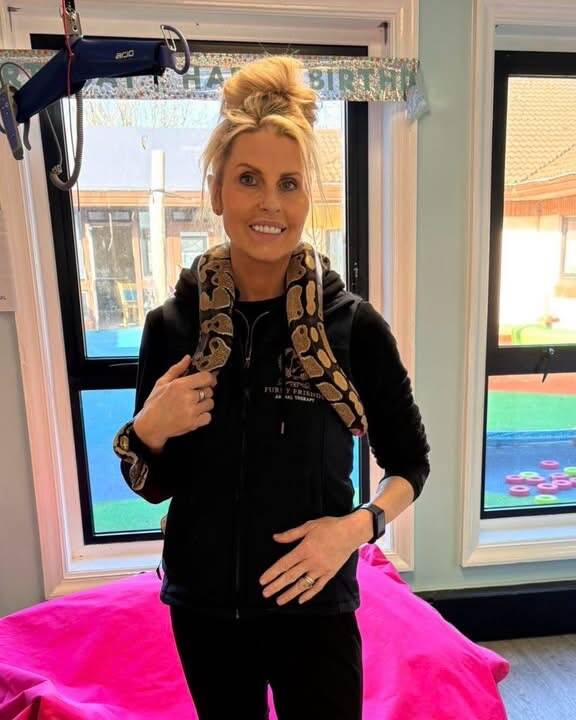
What if Furry Friends became a dementia-focused social care farm?
Imagine somewhere that doesn’t feel clinical or institutional.
Somewhere people living with dementia could arrive in the morning and simply enjoy being part of everyday life on the farm.
They might help feed the animals, groom the ponies and donkeys, cuddle a rabbit or guinea pig, collect eggs or simply sit peacefully watching the animals.
There could be gardening and growing vegetables, arts and crafts, baking, gentle walks through the countryside and plenty of cups of tea.
There could be music, conversations, laughter and opportunities to reminisce and share stories.
And there could also be days when somebody simply wants to sit quietly with an animal beside them.
Because meaningful activity doesn’t have to mean being busy every minute of the day.
The aim would be to create opportunities for people to continue using their abilities, making choices, building confidence, forming friendships and experiencing that incredibly important feeling of being needed and valued.
Not simply attending somewhere to be cared for, but genuinely being part of it.
Seeing the person, not the dementia
For me, this would never be about simply “looking after” people.
It would be about seeing the person behind the dementia.
Their personality. Their history. Their interests. Their humour. Their skills. Their preferences. The things that make them them.
Dementia may change aspects of someone’s life, but it doesn’t erase the person.
I would want everything we offered to recognise what somebody can still do, rather than constantly reminding them of what has become more difficult.
If spending time here could help someone maintain their independence, confidence, abilities and sense of purpose for longer, that would be incredibly special.
Supporting families too
There’s another side to this idea that matters enormously to me: the families and carers supporting somebody living with dementia.
Imagine knowing that your loved one was spending the day somewhere they felt safe, valued and genuinely happy.
Somewhere they were laughing, making friendships, spending time outdoors, interacting with animals and taking part in activities that actually meant something to them.
And while they were enjoying their day, their family carer could have some valuable time to rest, work, spend time with other family members or simply breathe for a little while, knowing their loved one was being supported in a caring and enriching environment.
If something like this could provide meaningful days for people living with dementia, support the people who love and care for them and perhaps even help individuals remain living happily within their own homes and communities for longer, then I truly believe it could make a real difference.
Working together
This isn’t something I would want to create in isolation.
One of the most exciting parts of the idea would be the opportunity to work alongside other professionals, organisations and services.
Social care professionals, dementia specialists, healthcare professionals, community organisations, carers and, most importantly, people living with dementia themselves and their families could all bring valuable perspectives.
Because if this ever does become a reality, I want it to be shaped around the people who would actually use it.
For now, it’s a seed of an idea
And that’s exactly what this is at the moment — an idea.
There is a huge amount to explore before anything like this could happen.
We would need to look carefully at permissions, insurance, safeguarding, staffing, accessibility, funding, appropriate training, any relevant CQC requirements and the wider regulations involved in providing this type of support.
If we ever do it, we want to do it properly.
But what started as a passing thought has very quickly become something I’m genuinely passionate about exploring.
So before we go any further, I’d really love to hear from you.
- Would you consider something like this for a loved one living with dementia?
- If you’ve cared for somebody living with dementia, what would you want a place like this to offer?
- What would make you feel confident and comfortable leaving your loved one in our care?
- Do you think there is a need for something like this in East Yorkshire?
And if you work within dementia care, adult social care, healthcare or another relevant organisation, I’d also love to hear your thoughts and experiences.
This may never have been part of the original plan for Furry Friends.
But sometimes the best ideas aren’t the ones we plan.
They’re the ones that quietly find us through the people we meet, the experiences we share and the difference we suddenly realise we might be able to make.
Perhaps this is the beginning of something very special.
We’d love to hear what you think.
Add comment
Comments