

Sugar Gliders
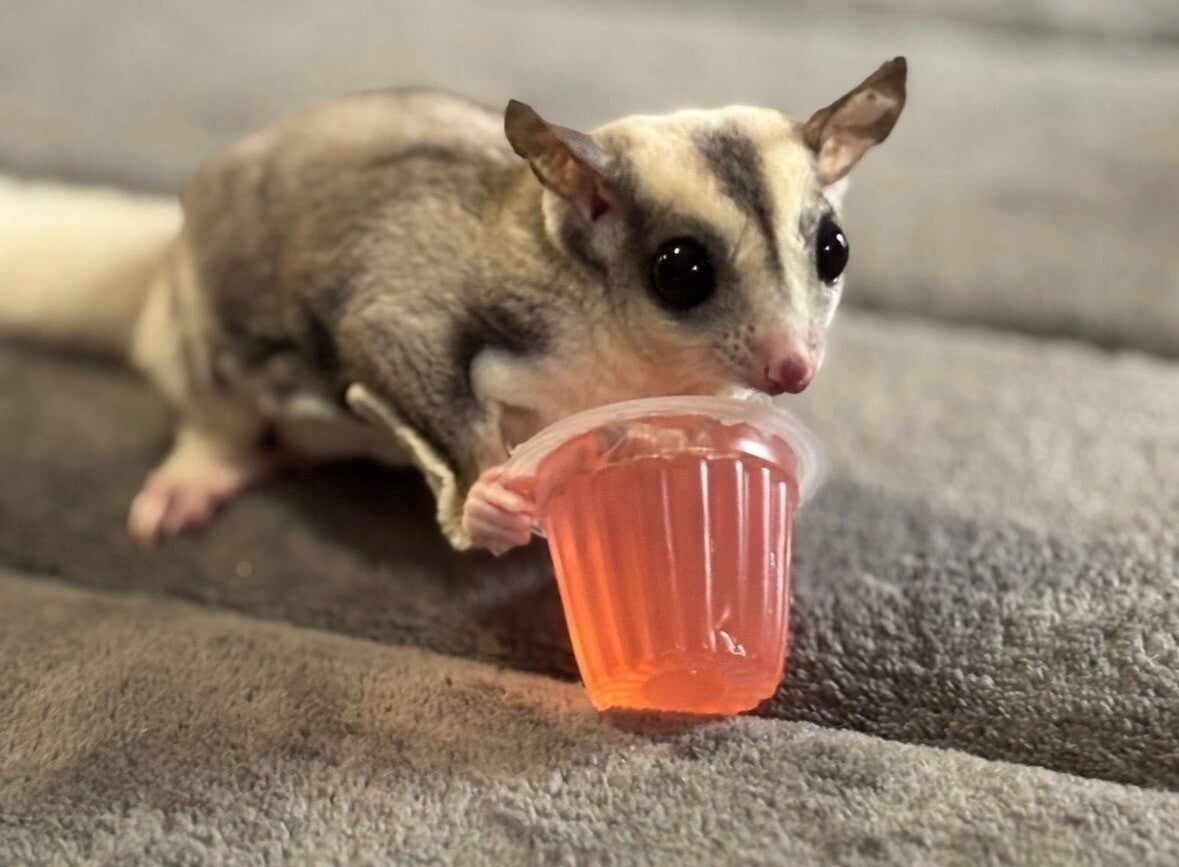
They’re small, soft, and undeniably adorable.
Big eyes, tiny hands, and the ability to glide through the air makes sugar gliders one of the most fascinating animals you can come across.
But just like many exotic animals, what people see online and what real life looks like are two very different things.
Sugar gliders are not an easy pet.
They are highly specialised, highly social, and require a level of care that goes far beyond what most people expect.
What Are Sugar Gliders
Sugar gliders are small nocturnal marsupials, scientifically known as Petaurus breviceps, originally from Australia, New Guinea, and parts of Indonesia.
As marsupials, they carry their young in a pouch, much like kangaroos. Baby sugar gliders, known as joeys, are incredibly underdeveloped at birth and continue to grow safely within the mother’s pouch.
In the wild, they live in colonies and rely heavily on social bonds, communication, and scent marking to recognise one another.
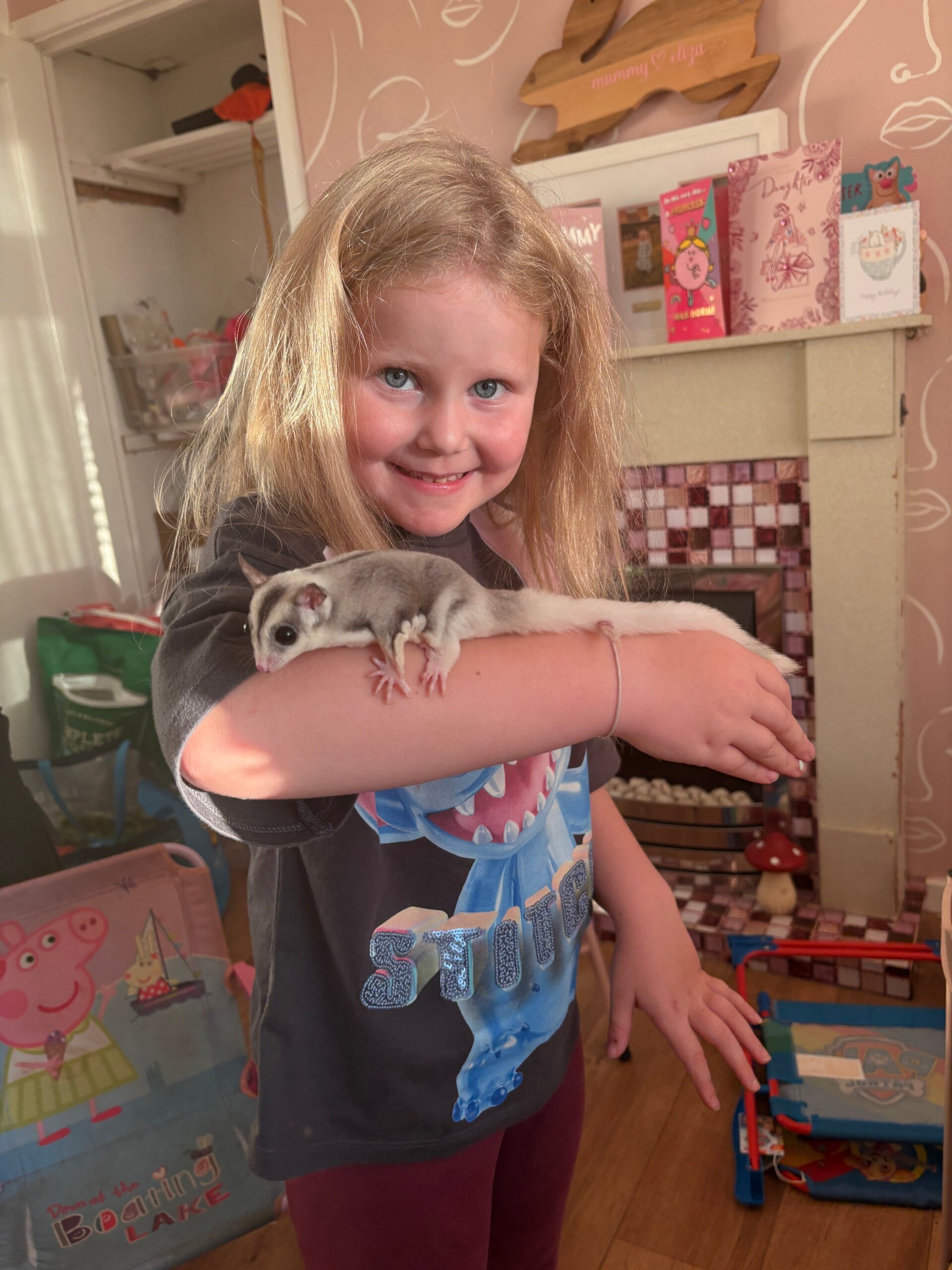
One of their most unique features is the patagium, a thin membrane stretching from their wrists to their ankles, which allows them to glide distances of up to 50 metres between trees.
They are not rodents, and their needs are very different to animals people often compare them to.
The Reality of Their Care
Sugar gliders should never be kept alone.
They are extremely social animals and rely on companionship for their emotional wellbeing. A lone sugar glider can become stressed, withdrawn, and may even develop self harming behaviours.
They are also nocturnal, meaning their most active time is during the night. This alone makes them unsuitable for many households.
Their care is not simple or quick.
They require:
- daily interaction and bonding
- a consistent routine
- mental stimulation and enrichment
- careful observation of behaviour
Building trust takes time, patience, and consistency. They do not instantly become tame, they learn to trust over time.
Intelligence and Bonding
One thing that often gets overlooked is just how intelligent sugar gliders are.
They are not just reactive animals, they learn, recognise, and respond.
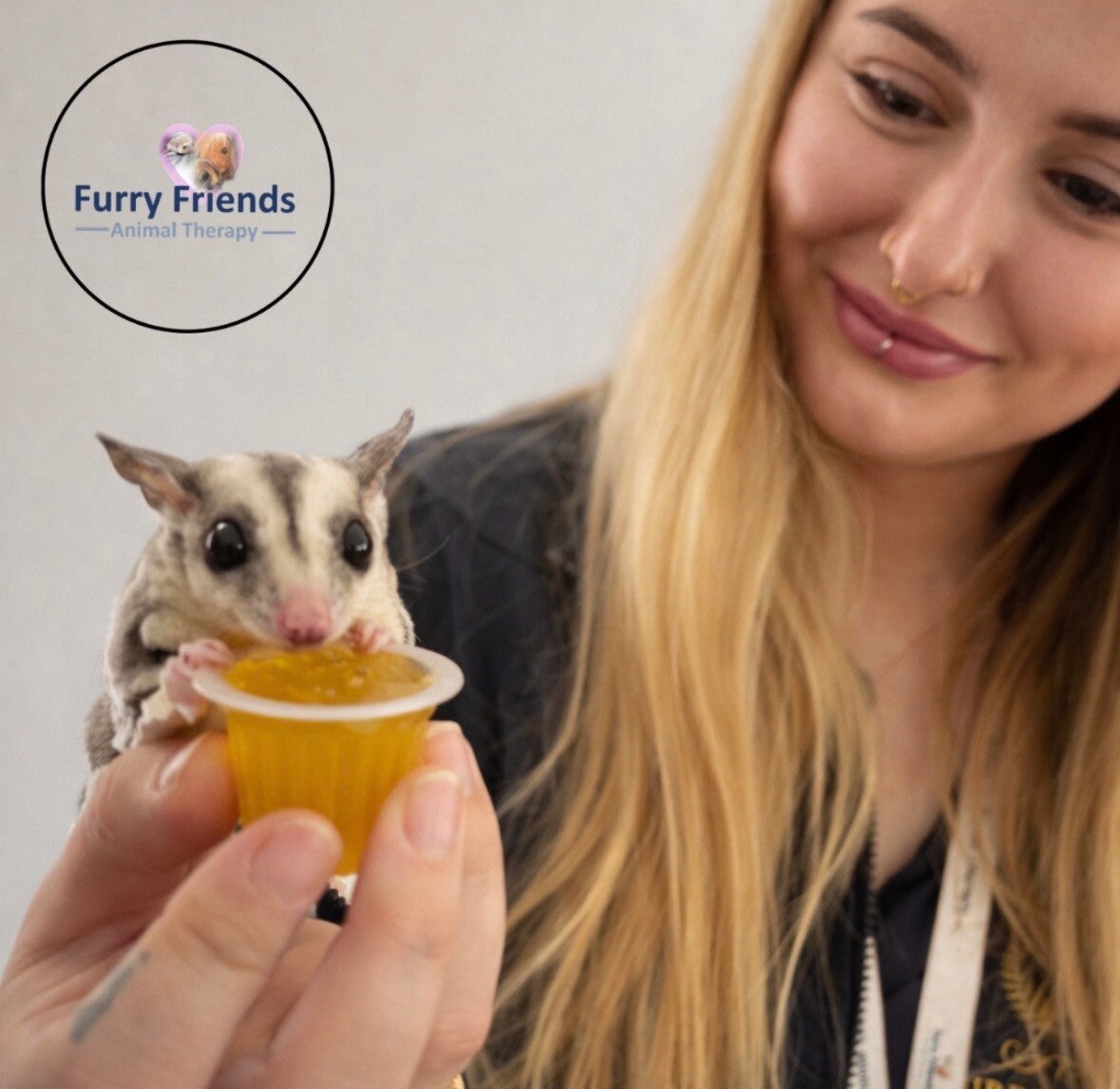
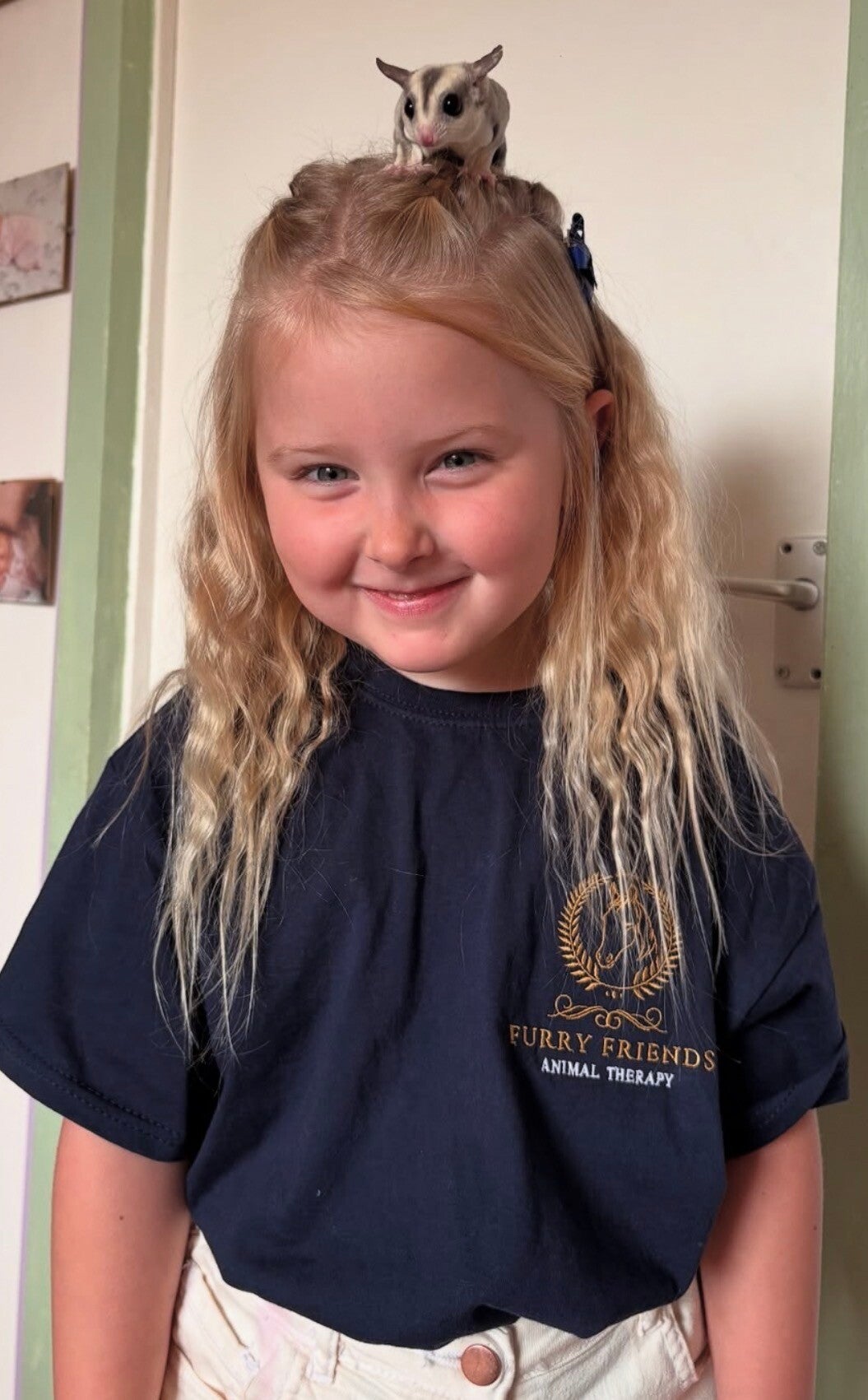
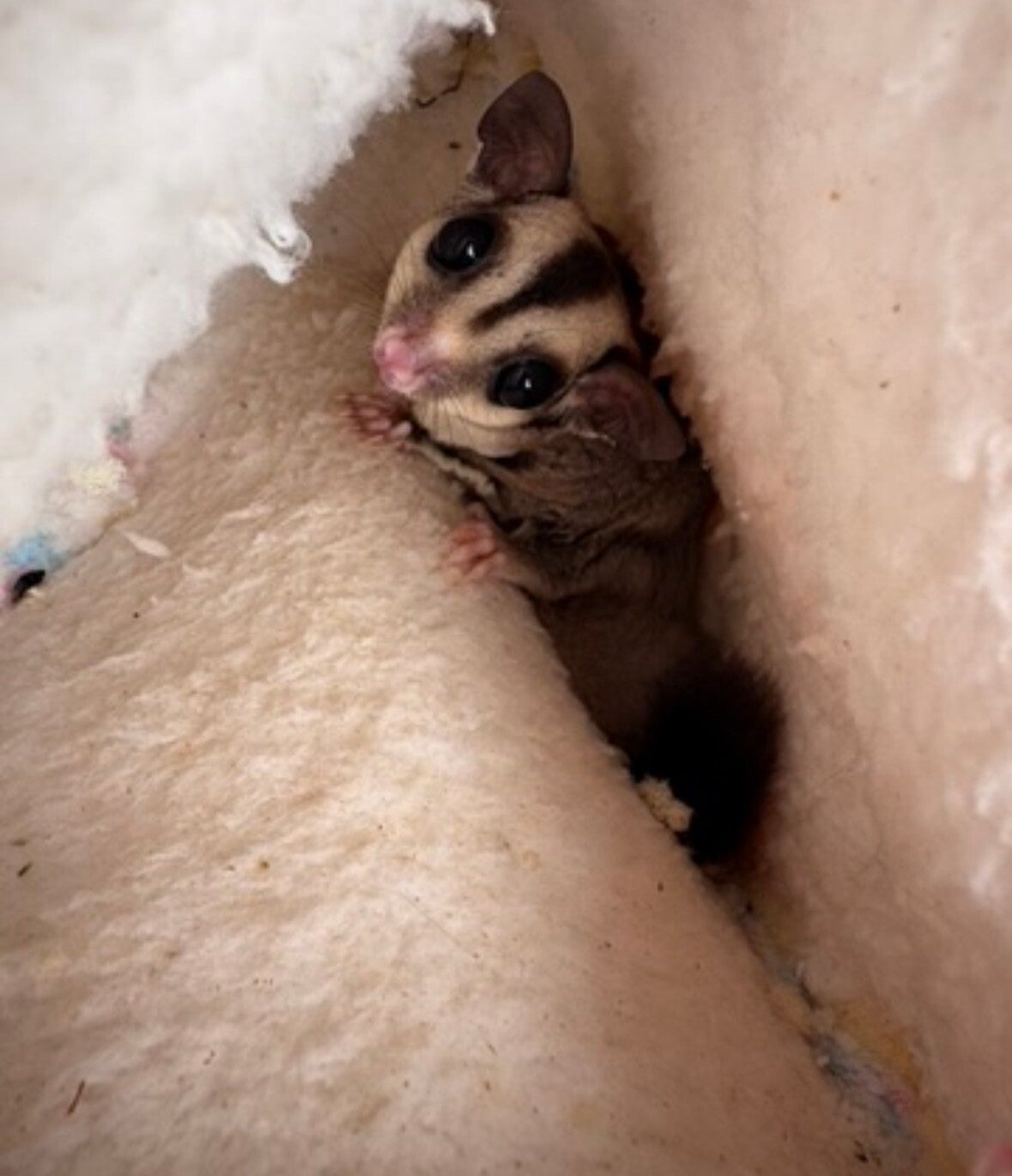
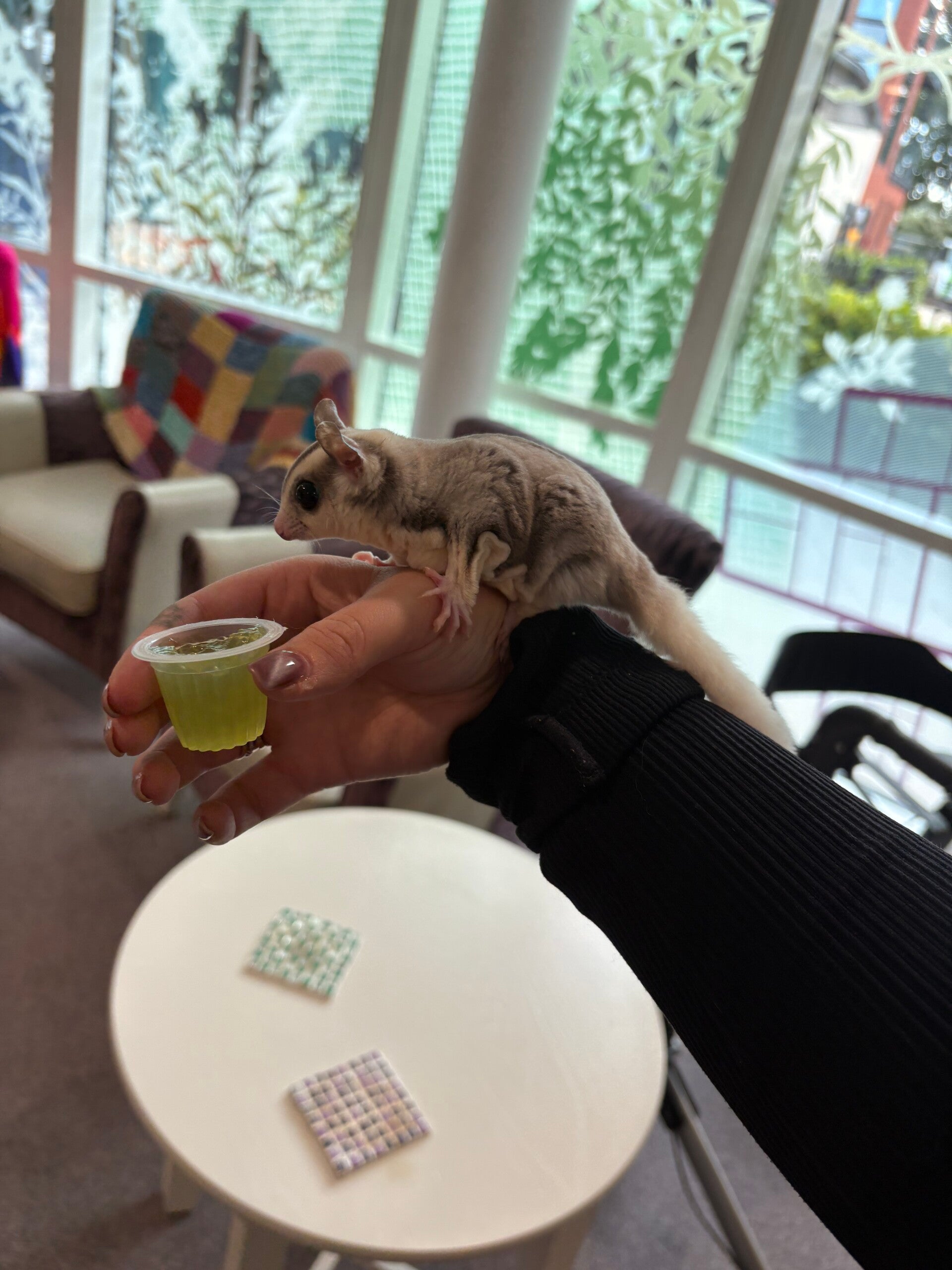
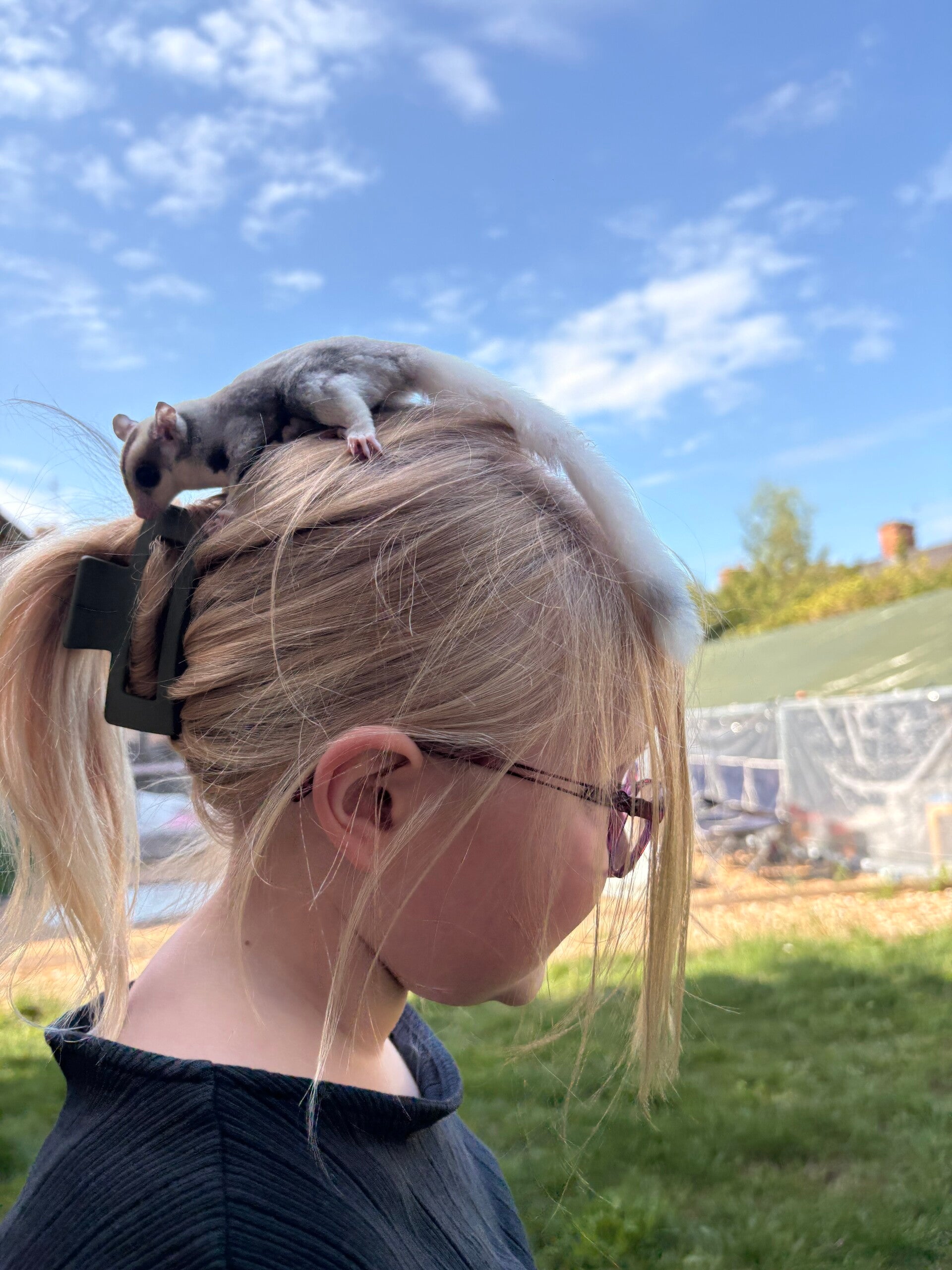
Within Furry Friends, Audrey has shown just how capable they can be. She responds to her name, will glide to her handler when called, and during visits, when “home time” is said, she will move from an arm and glide directly into her pouch inside her secure travel enclosure.
That level of understanding comes from consistency, trust, and a strong bond.
However, it is important to understand that Audrey is very much the exception, not the rule.
Not all sugar gliders are naturally calm, accepting, or suited to this kind of work.
Sheila, the second glider within the team, has made it very clear that she prefers a much quieter life and would not be suited to therapy environments at all.
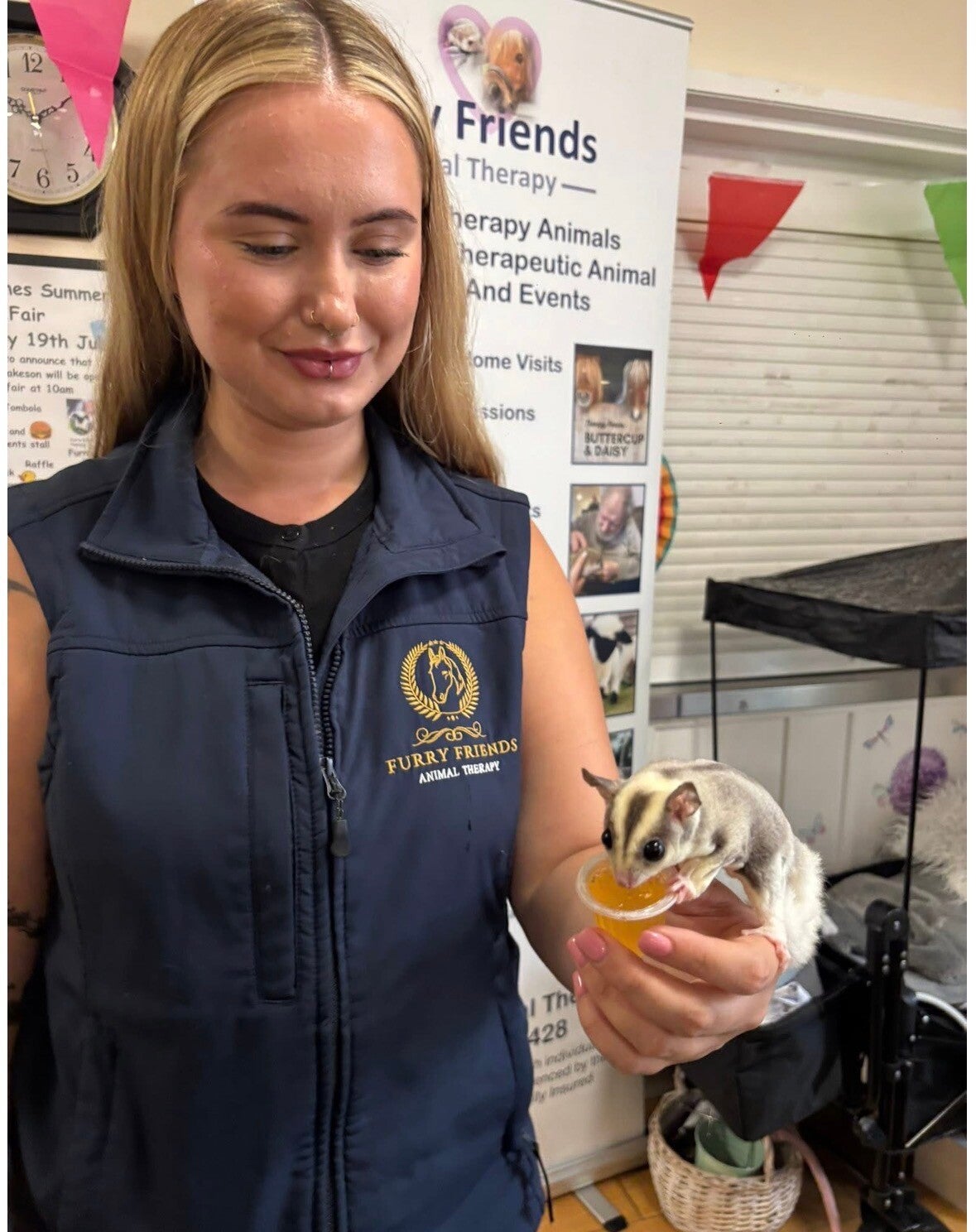
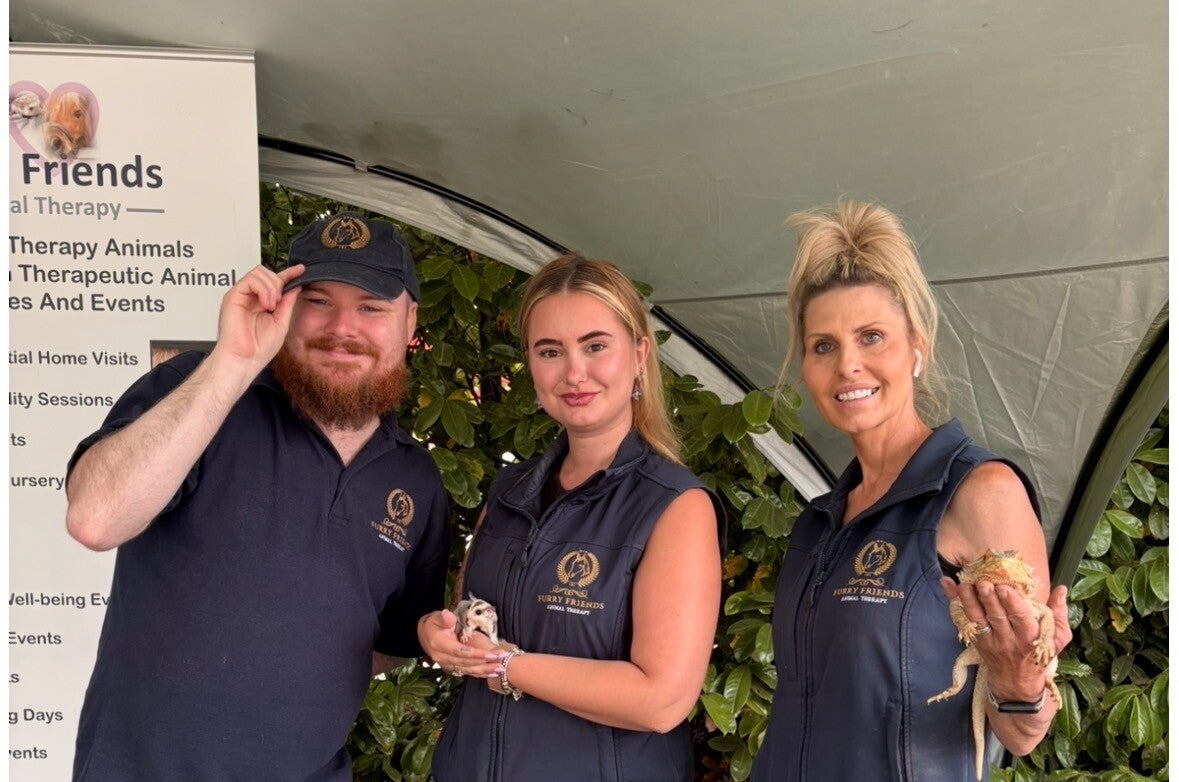
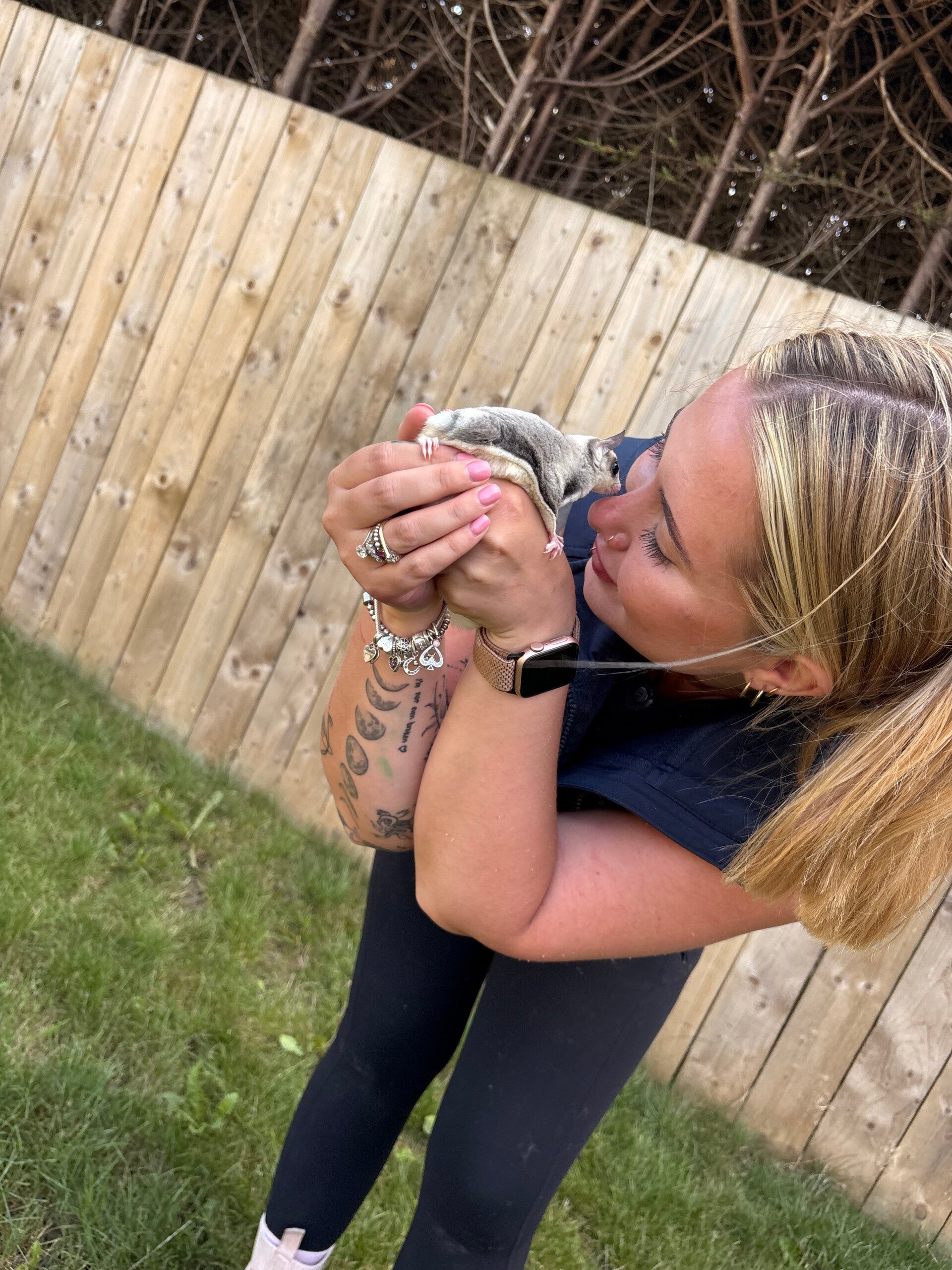
Sugar gliders often form very strong bonds with one person, and Sheila has bonded closely with Imogen, who is the main handler and carer for the gliders within Furry Friends.
This is completely normal behaviour for the species and highlights how important it is to respect each individual animal’s personality and limits.
Housing and Setup
Sugar gliders need a large, vertical enclosure that allows them to climb, jump, and glide.
Their enclosure should include:
- multiple levels
- branches and climbing areas
- enrichment toys
- fleece pouches for sleeping
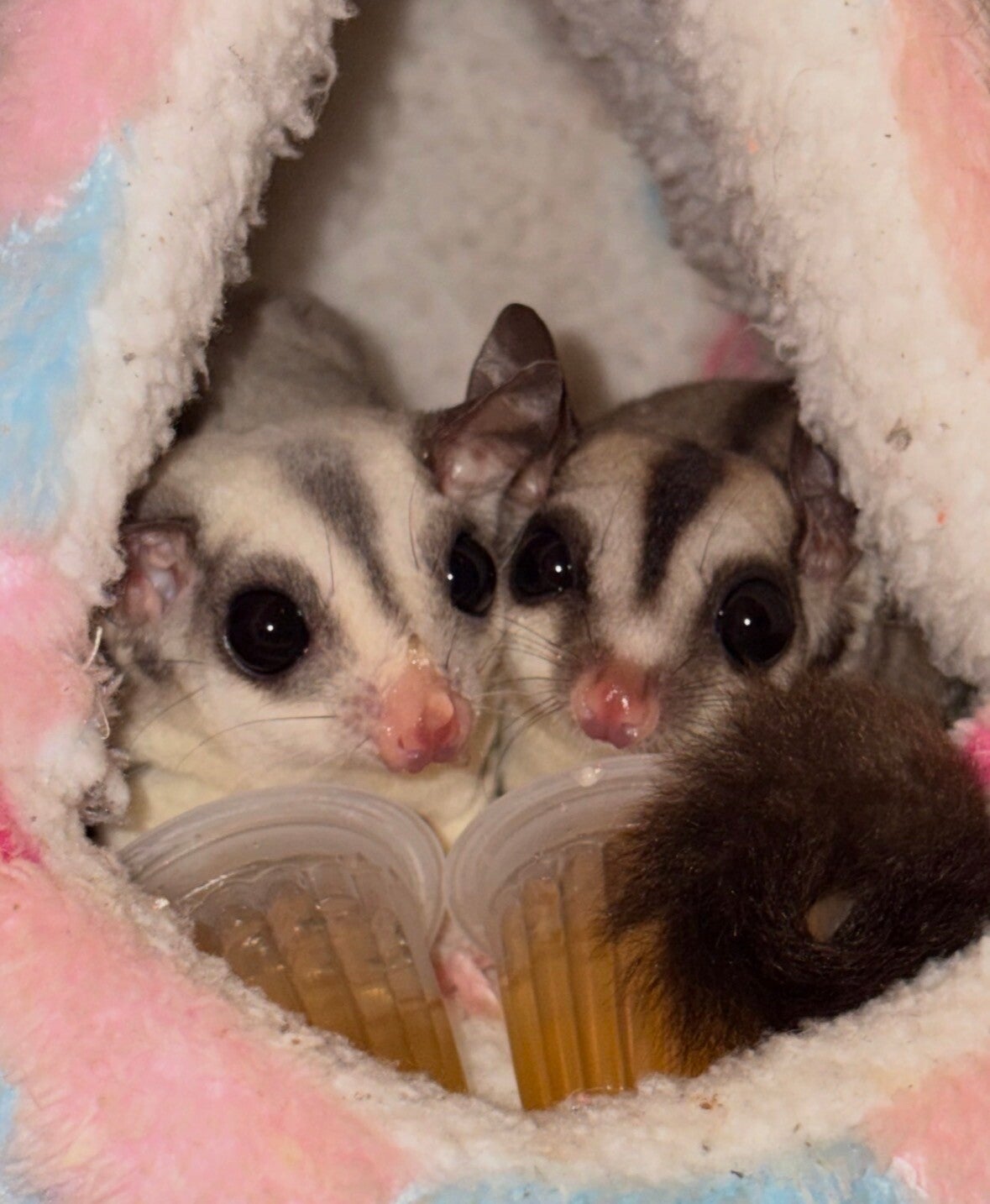
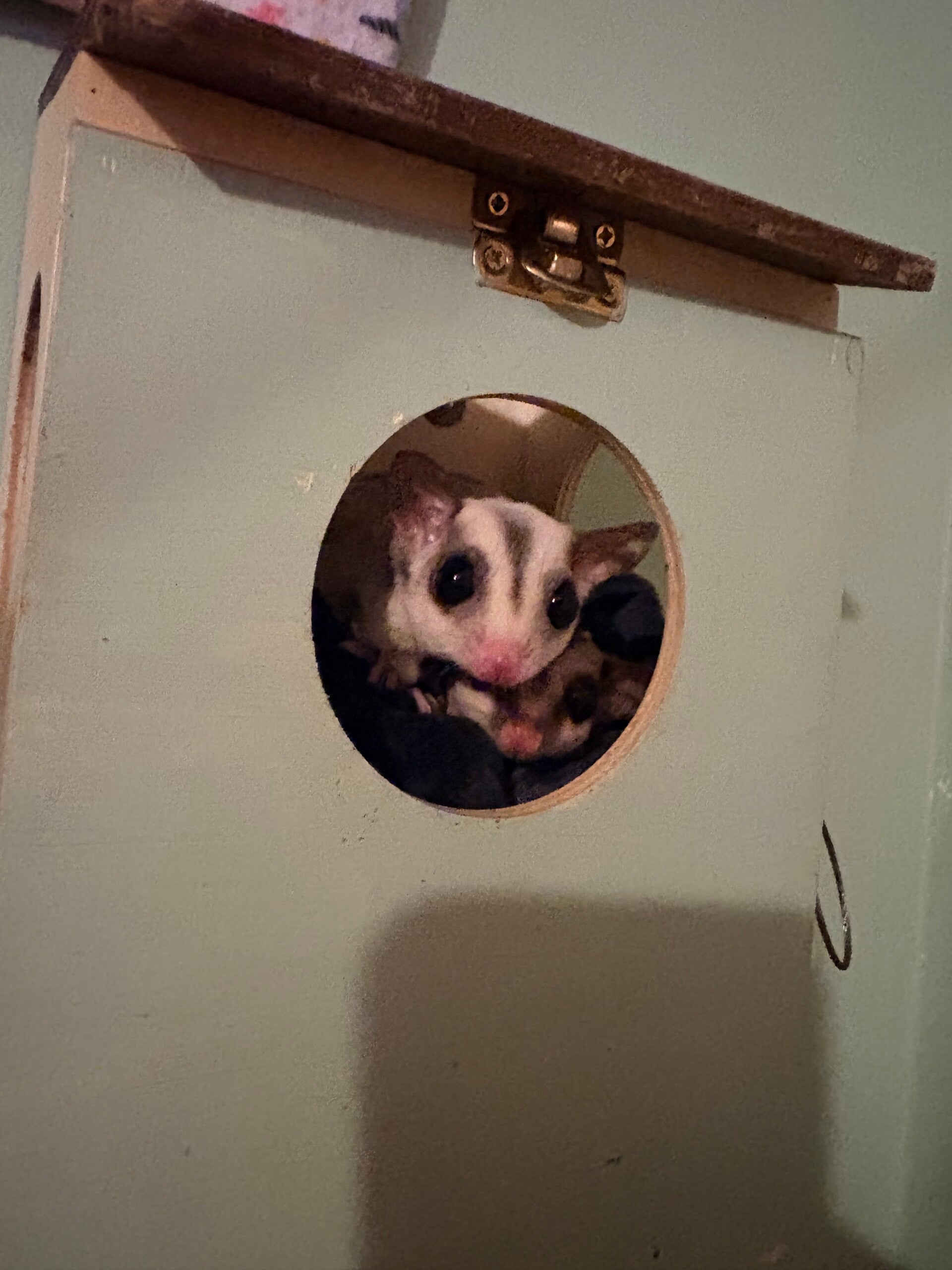
They spend most of their day sleeping in warm, enclosed pouches, often curled up together for comfort and security.
Their environment must be completely secure. Sugar gliders are incredibly intelligent and are known escape artists. Even small gaps can be enough for them to get out.
Diet and Nutrition
Diet is one of the most important and often misunderstood parts of sugar glider care.
In the wild, their diet includes sap, nectar, insects, and plant material.
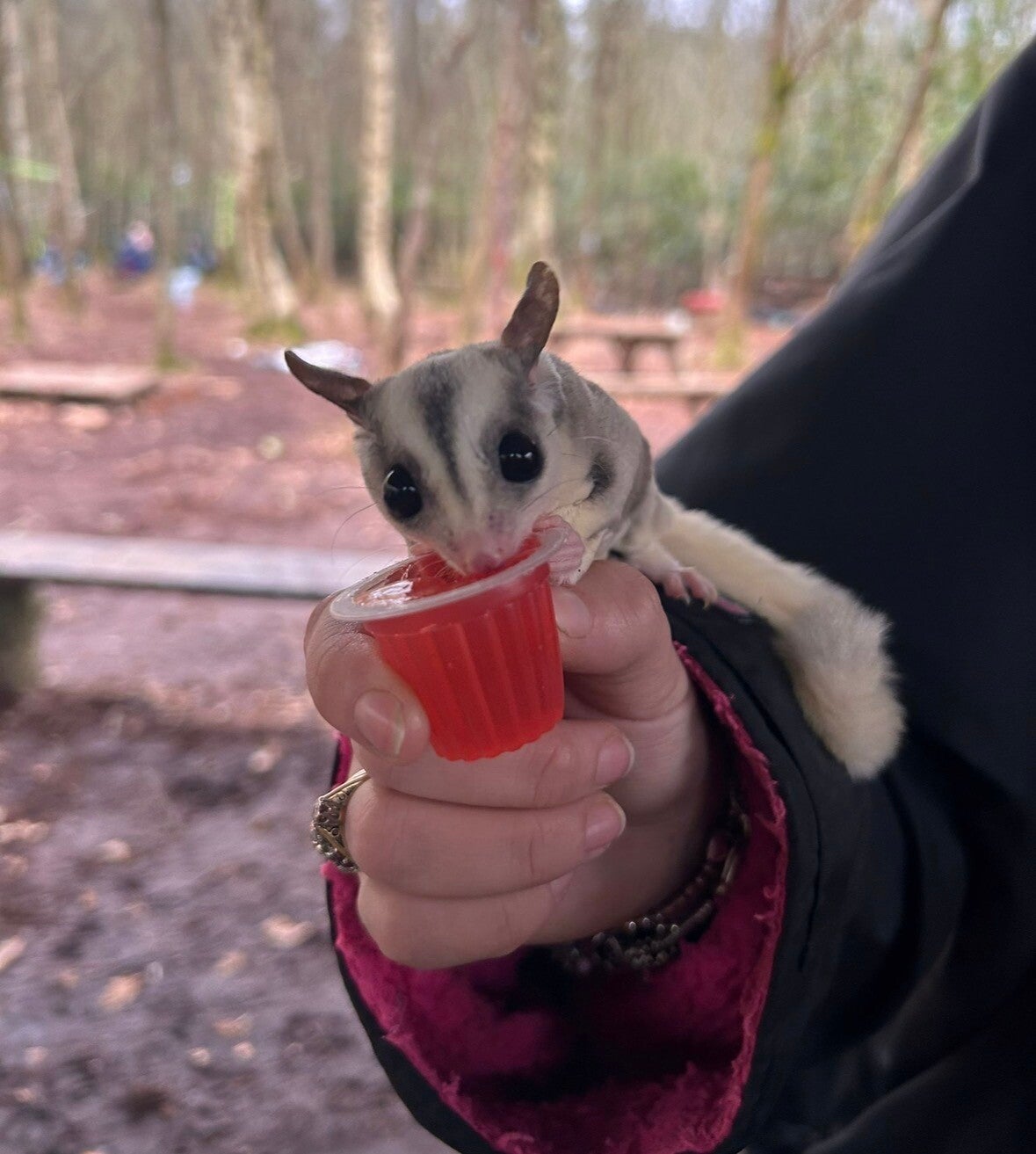
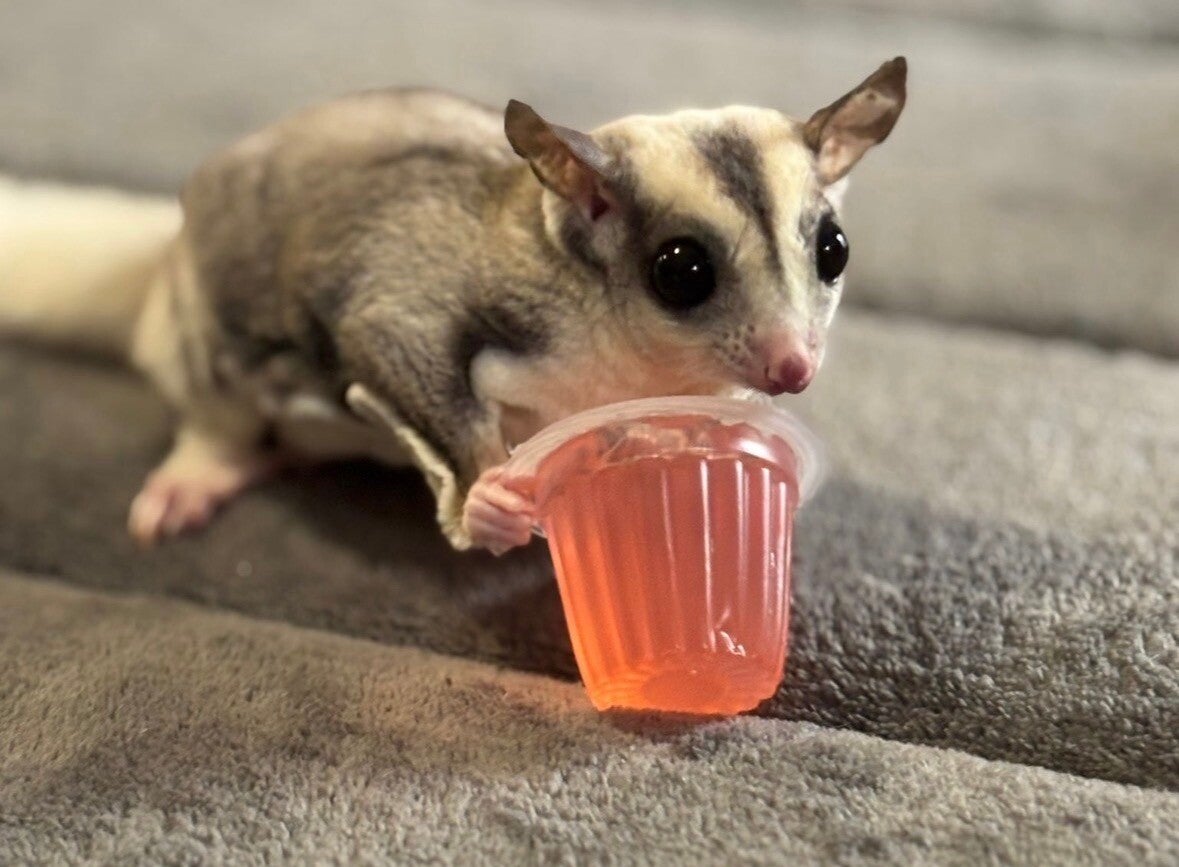
In captivity, this needs to be carefully replicated through a balanced diet such as an SGS mix, alongside fresh fruits, vegetables, and protein sources.
Calcium to phosphorus ratios are especially important, as imbalances can lead to serious conditions such as metabolic bone disease.
Getting their diet wrong is one of the most common causes of illness in sugar gliders.
Costs
Sugar gliders are not cheap animals to keep.
Initial setup can include:
- a suitable enclosure
- enrichment items
- sleeping pouches
- diet preparation supplies
Ongoing costs include:
- fresh food and diet ingredients
- replacement toys and enrichment
- veterinary care
- supplements
Exotic vet care can also be more expensive, and not all vets have experience with sugar gliders.
Health and Welfare
Sugar gliders are delicate animals.
They can be prone to:
- dietary imbalances
- stress related behaviours such as overgrooming or self mutilation
- injuries from unsafe environments
- illness that can progress quickly if not caught early
They are also very good at hiding signs of illness, which means subtle changes in behaviour, appetite, or energy levels should never be ignored.
Regular observation and understanding of their normal behaviour is essential.
What People Don’t Always Know
Sugar gliders communicate through a range of sounds, including barking, crabbing, and chirping.
Crabbing is a defensive noise often made when they feel threatened or unsure, not aggression.
They also rely heavily on scent marking, which is how they recognise their environment, their colony, and their humans.
Bonding with a sugar glider is not instant. It takes time, patience, and consistency to build trust.
They can live around 10 to 15 years in captivity, making them a long term commitment.
The TikTok Reality
In recent years, sugar gliders have become increasingly popular on social media, especially TikTok.
Short clips of them gliding, sitting in hands, or being carried around make them look easy, calm, and low effort.
But those moments are just that. Moments.
What you don’t see is:
- the nightly activity
- the complex diet preparation
- the bonding process
- the long term commitment
- the emotional and physical care they require
They are not an animal to get because they look cute online.
They are an animal to take on only when you fully understand what they need.
A Hard Truth
Something that is becoming more and more common is seeing sugar gliders advertised online as squirrels or sold as novelty pets.
Even more concerning is seeing them kept in small cages designed for hamsters or other small rodents.
It’s heartbreaking.
They are not squirrels.
They are not rodents.
And they are not animals that can live in small, basic setups.
They need height, space, companionship, and a carefully structured environment to thrive.
Situations like this often come down to a lack of understanding, but the impact on the animal is very real.
This is why education matters so much.
The Therapy Side
Despite all of this, sugar gliders can be incredibly special animals in the right setting.
When handled correctly and at their own pace, they can form strong bonds with their handler.
They are not an animal for constant handling or busy environments, but in calm, controlled situations they can create something very unique.
A quiet moment.
A gentle interaction.
A sense of curiosity and connection.
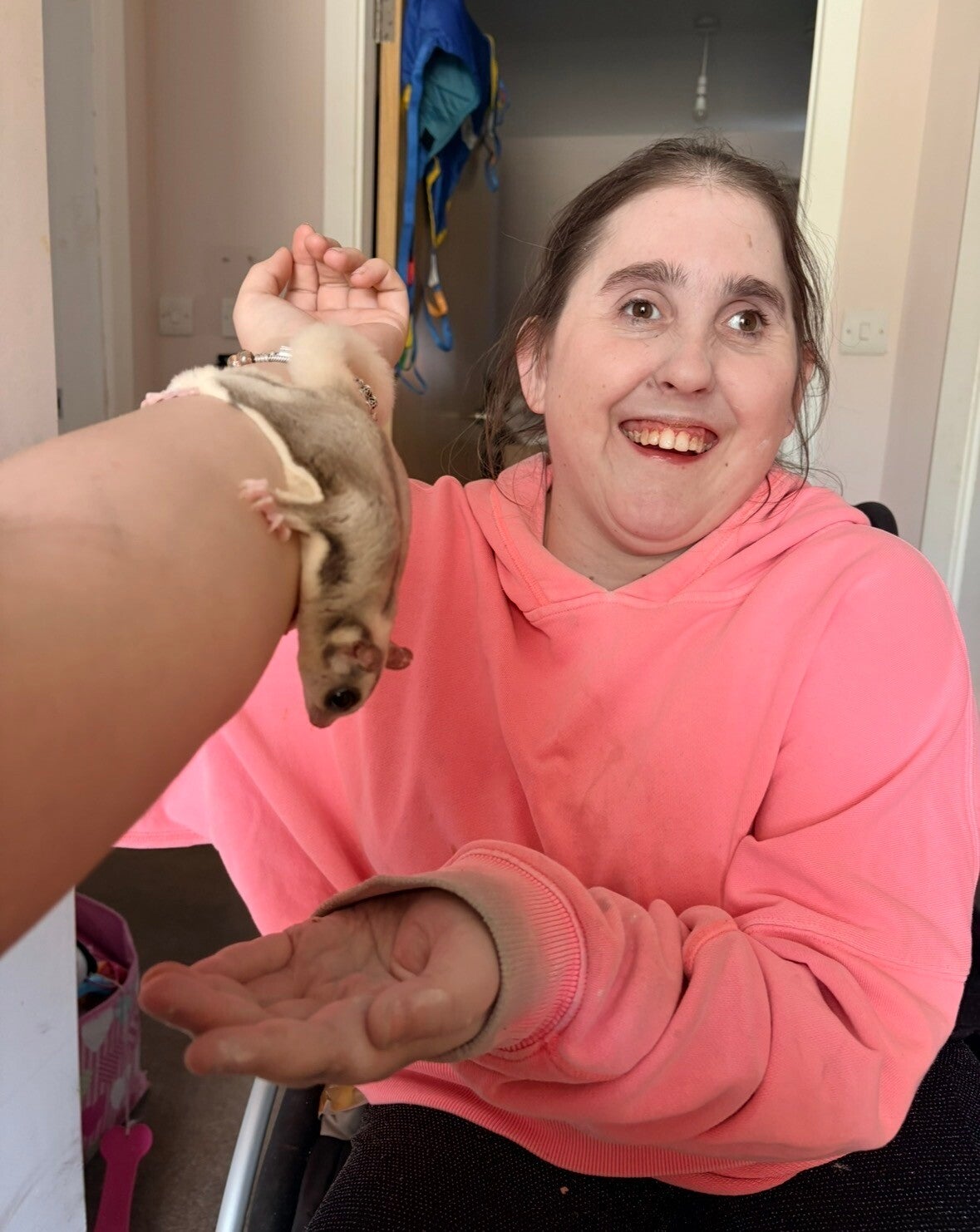
Their small size and gentle nature can help people feel at ease, especially when interactions are guided and respectful.
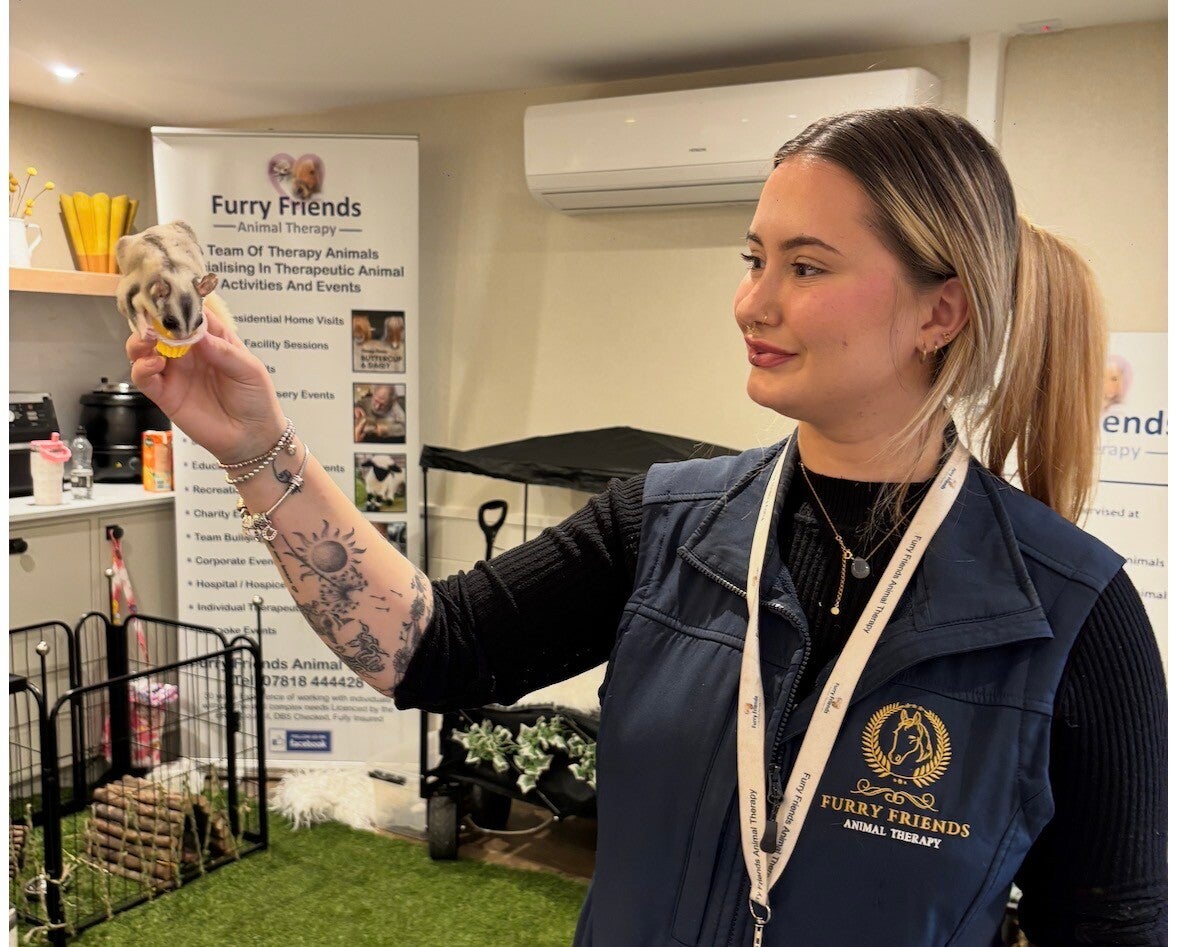
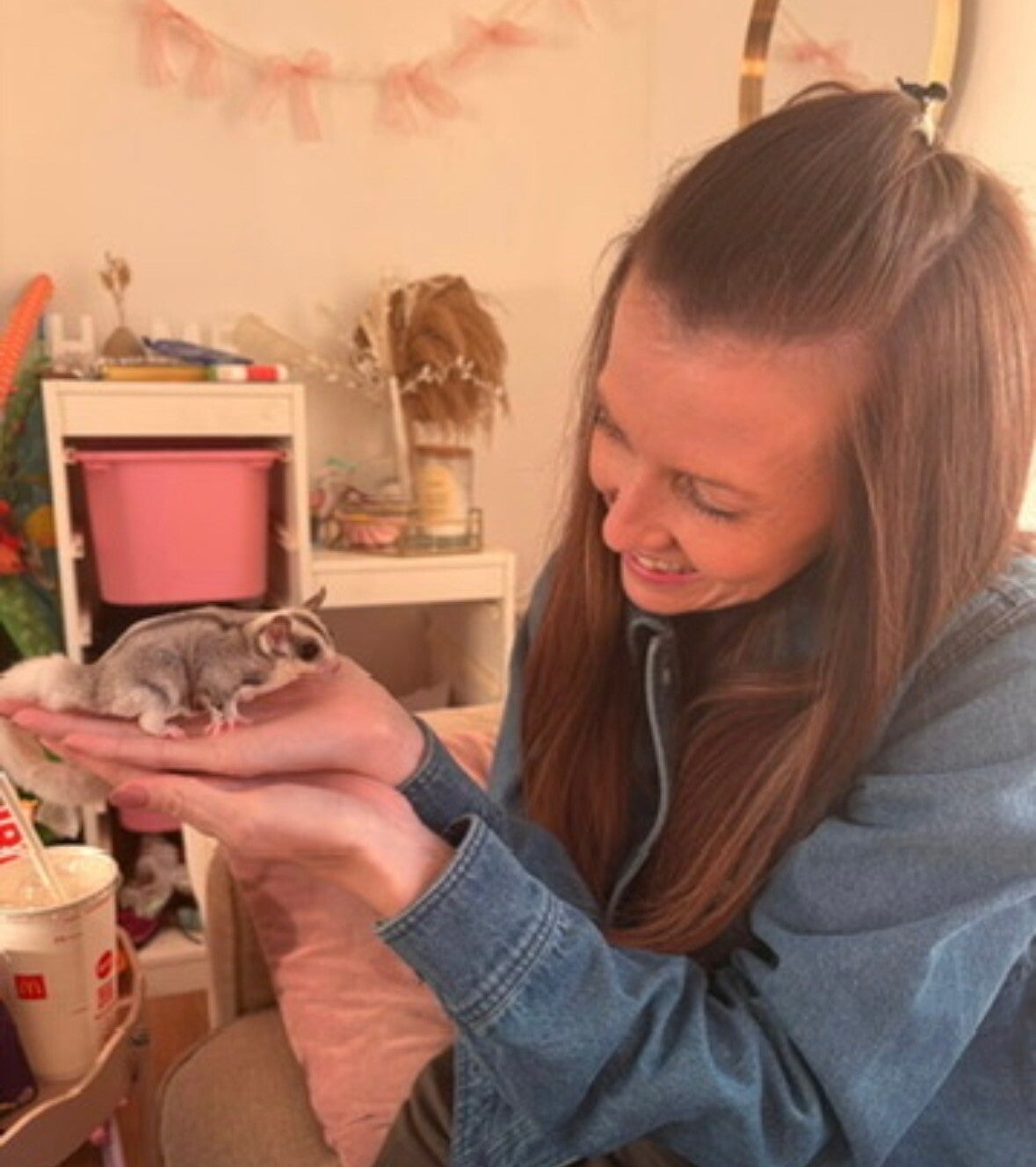
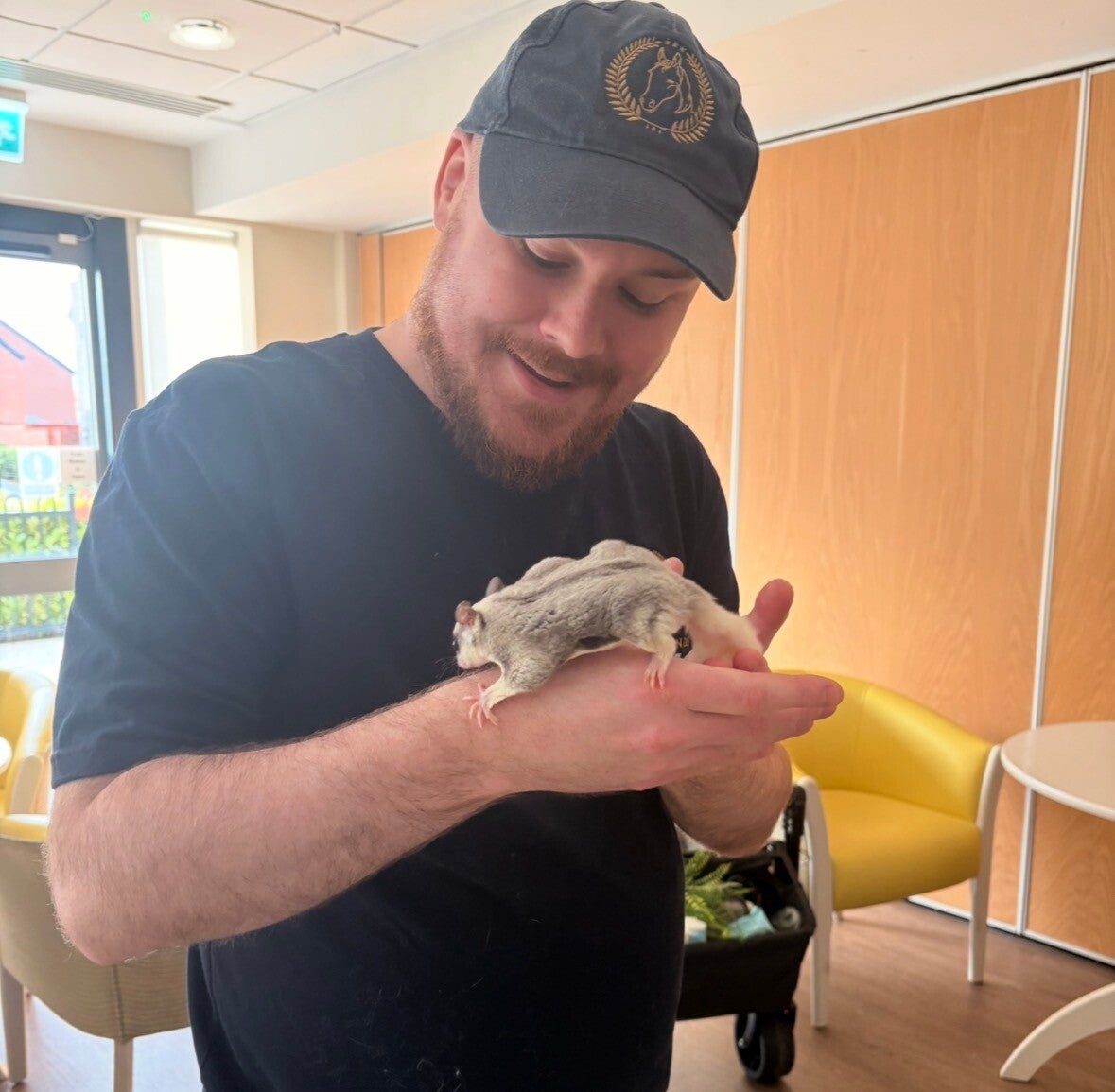
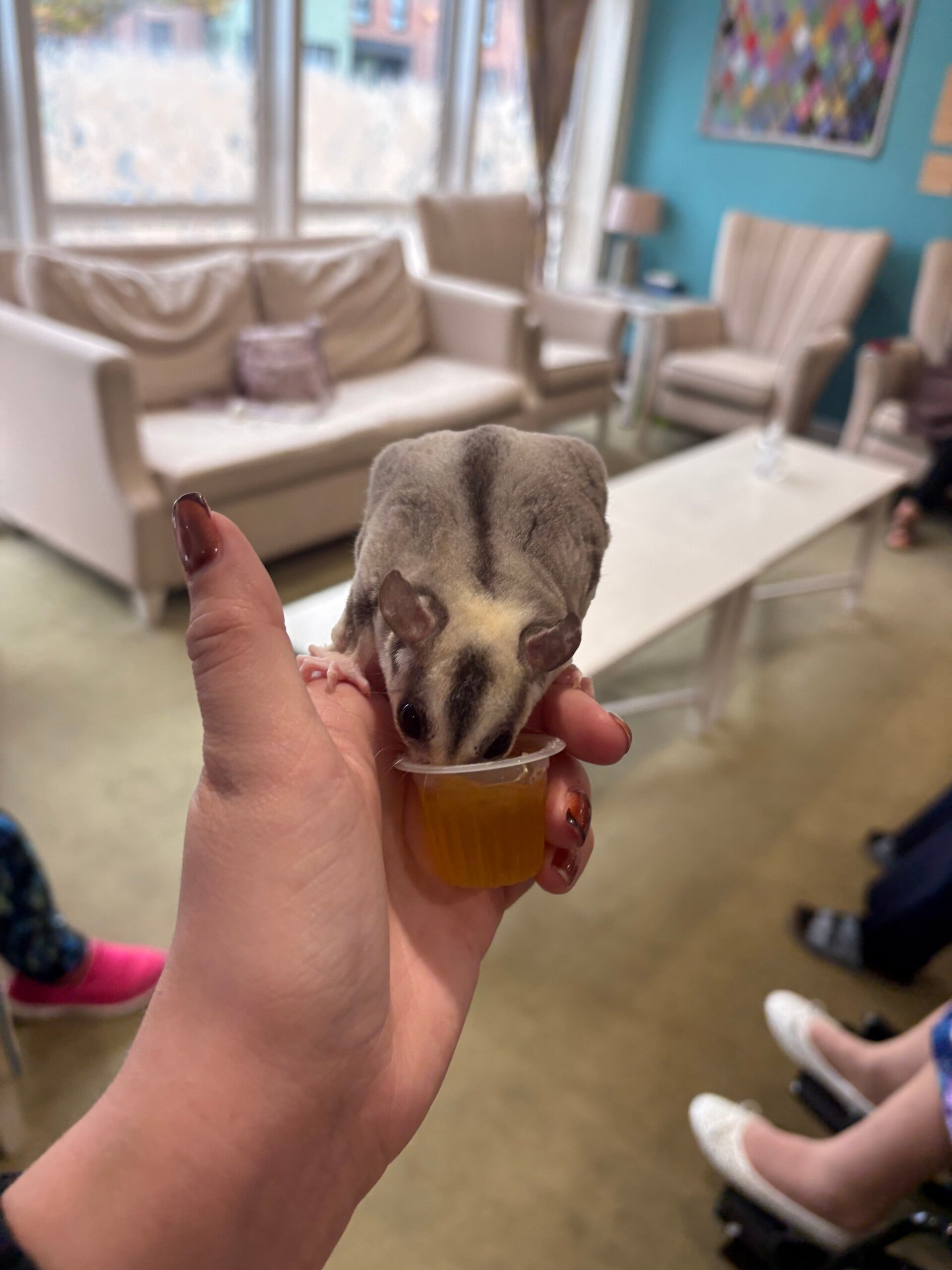
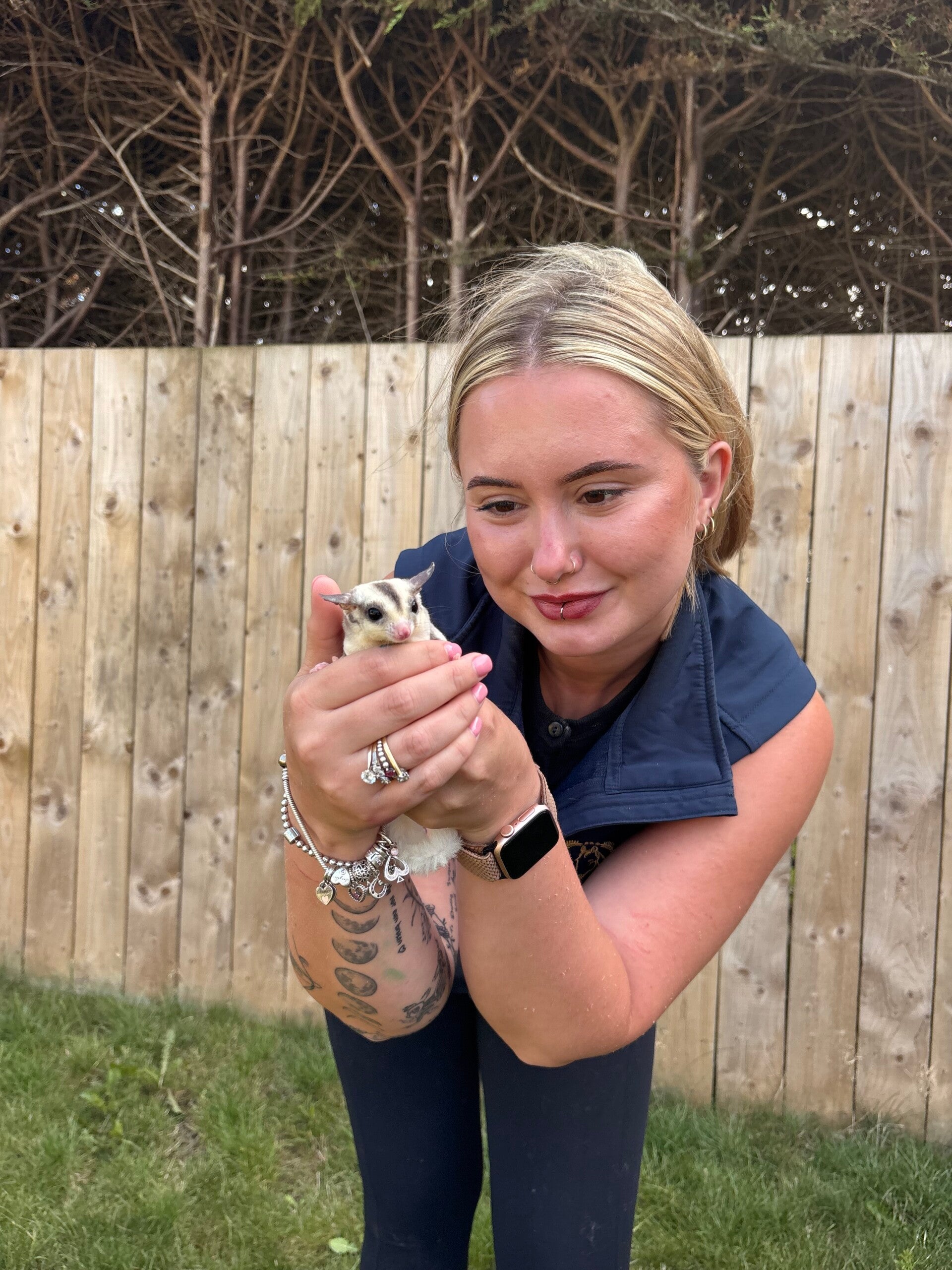
Although Audrey is known for enjoying a good snuggle, any interaction is always carefully managed. If the setting and atmosphere are right, she may be taken out of her pouch for short, structured interactions, allowing for gentle one finger stroking.
This is always done with Imogen present as her main handler, ensuring Audrey remains comfortable, secure, and in control of the interaction at all times.
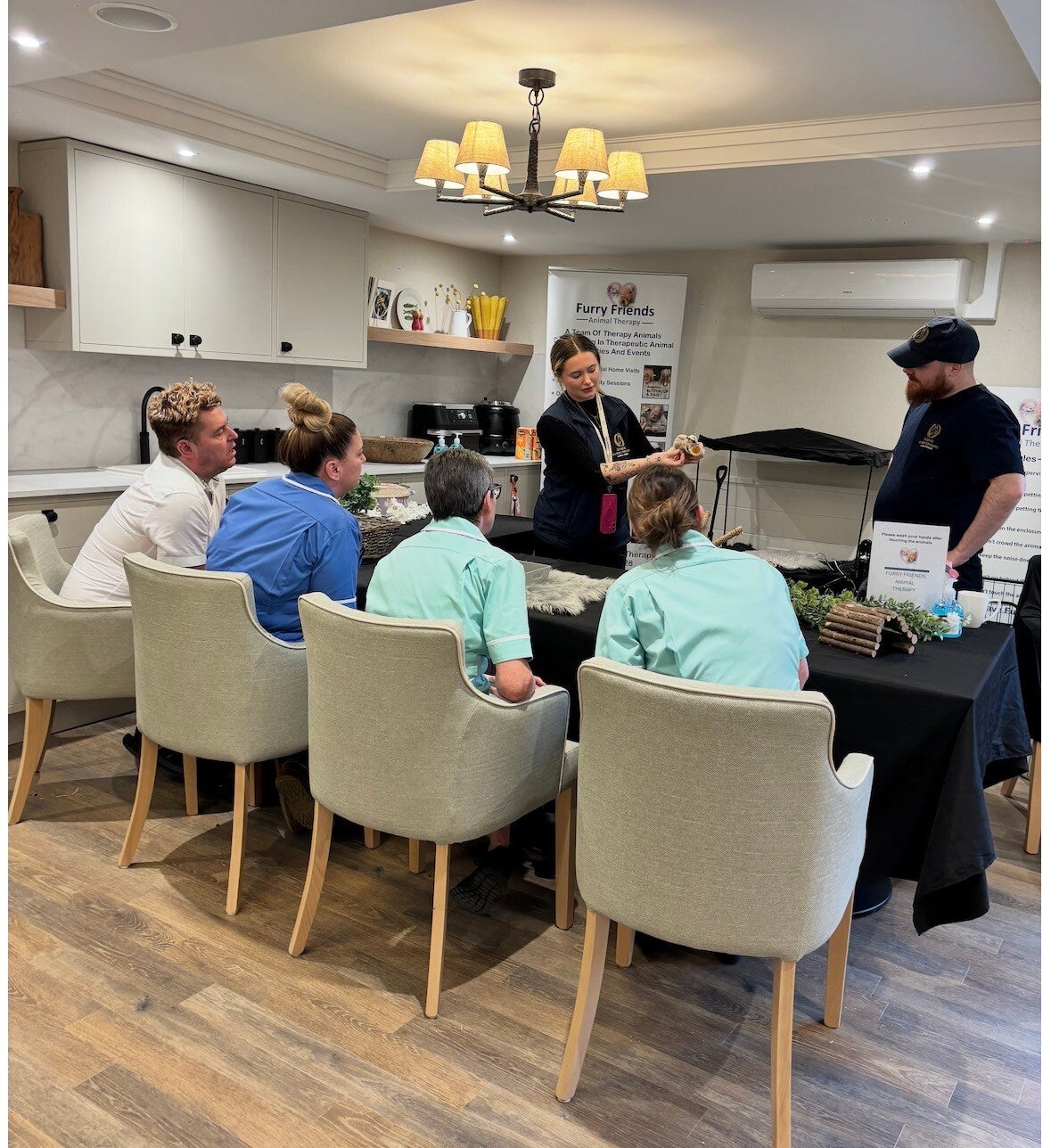
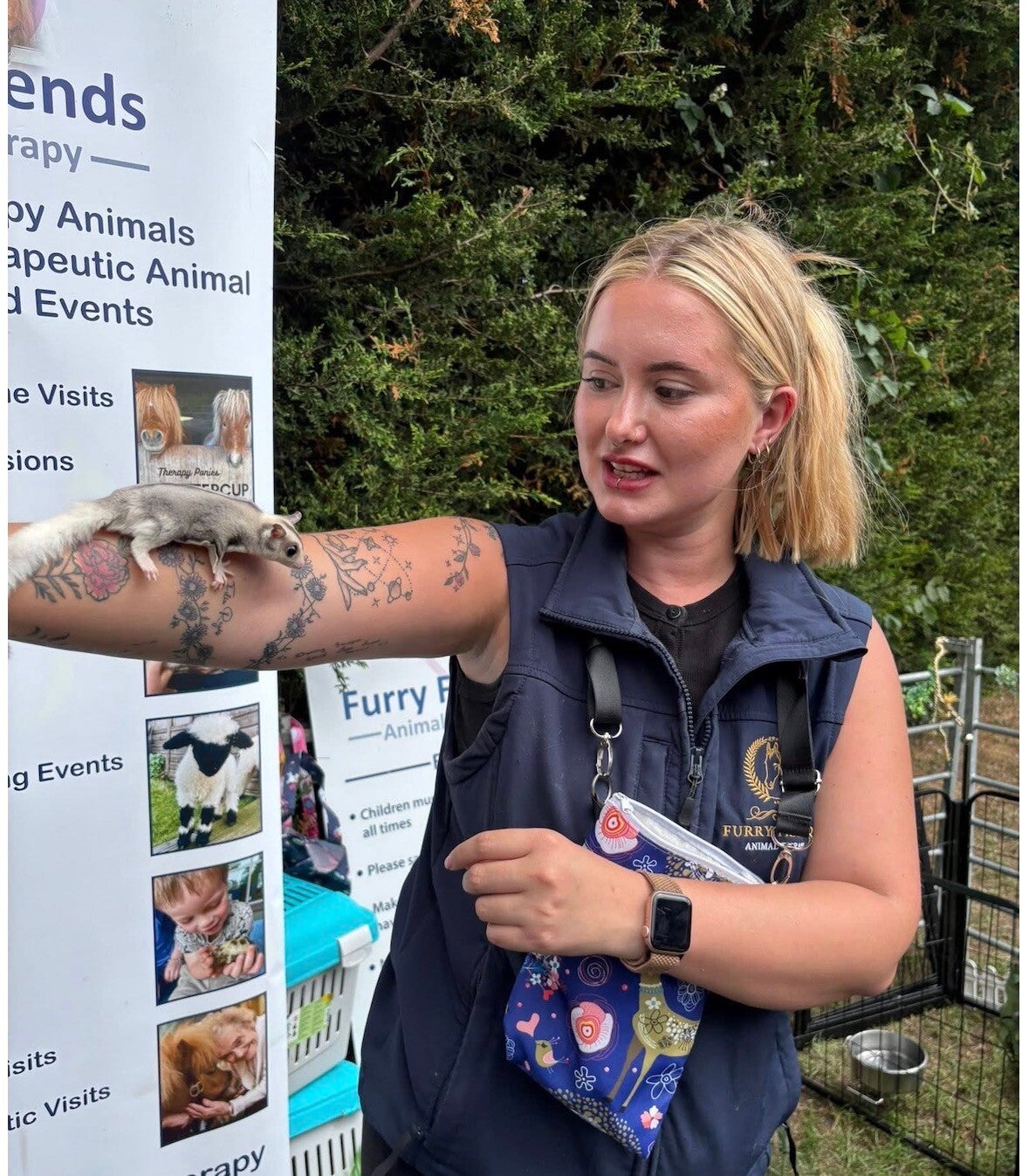
The Animal Assisted Therapy Practitioner and Director of the upcoming FFAT Certification Programme, Imogen, loves delivering educational sessions with Audrey. People are naturally fascinated by her, and it creates the perfect opportunity to share interesting facts, build understanding, and encourage a deeper appreciation for such a unique species.
They do not need to perform.
They do not need to do anything special.
They simply need to feel safe.
And that is where their value lies.
The Reality
Sugar gliders are not a beginner pet.
They require time, knowledge, and commitment.
They need routine, companionship, and an environment that is built around them.
They are not something to get on impulse, and they are not suited to every home.
But when they are cared for properly, understood, and given the right environment, they are truly incredible little animals.
Curious, intelligent, and full of personality.
Sweet as Sugar
Add comment
Comments